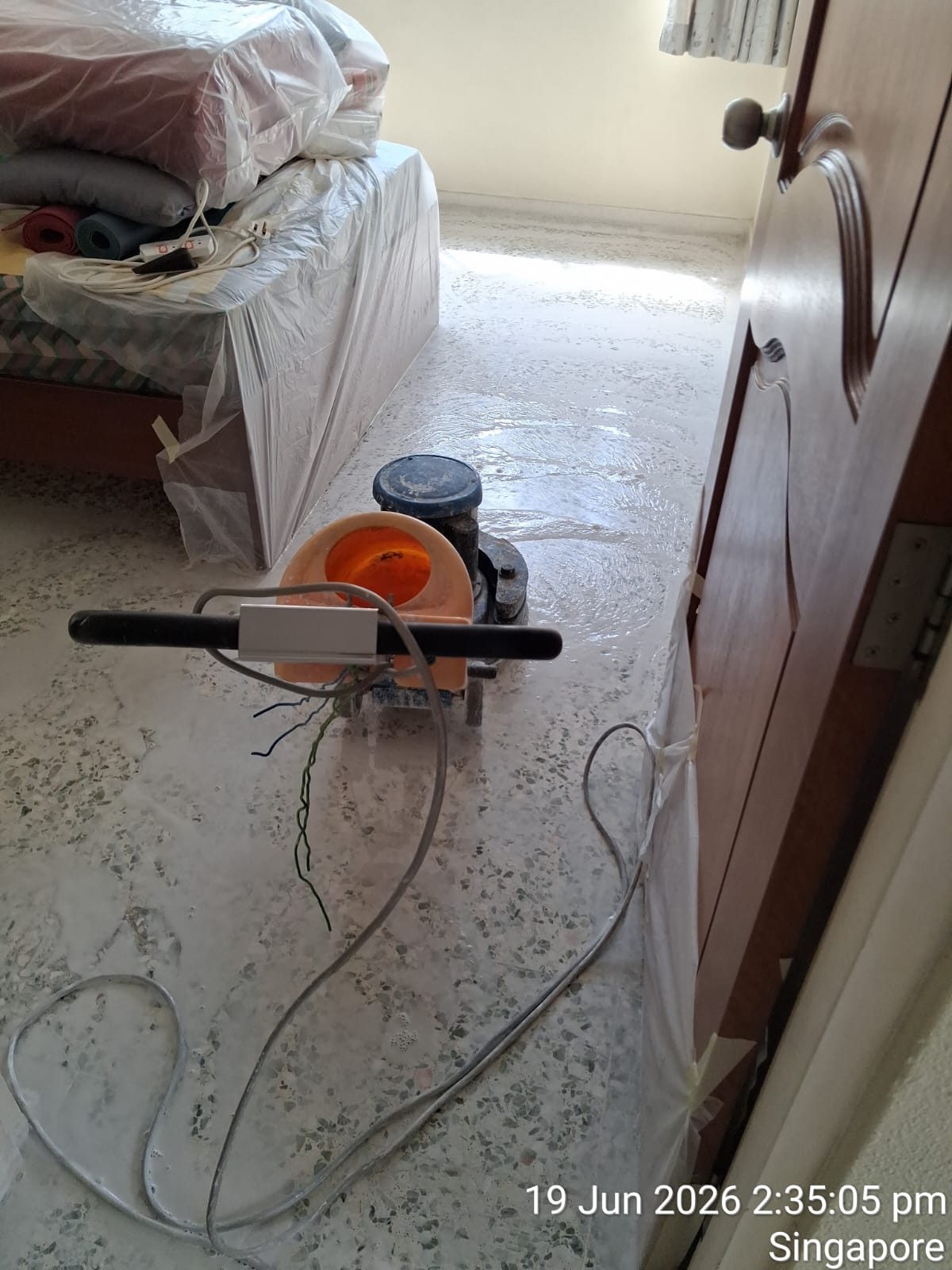
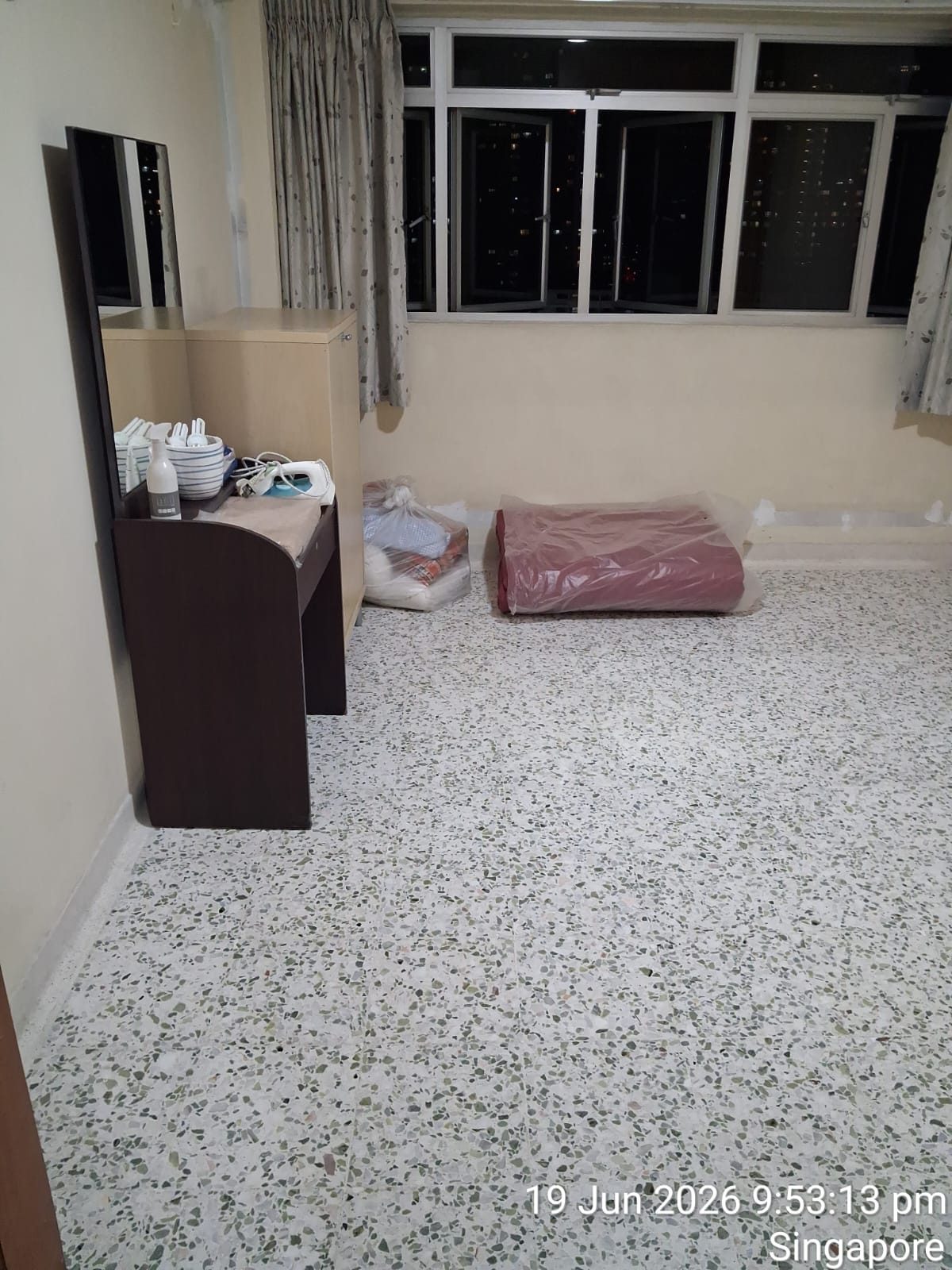
Not all terrazzo is the same underneath the surface, and knowing which type you have changes how it should be polished, repaired and maintained. The two broad categories are traditional cement-based terrazzo and modern epoxy (resin-based) terrazzo.

Cement (Traditional) Terrazzo
Common in older Singapore homes and HDB blocks built before the 1990s, cement terrazzo uses marble or granite chips set in a Portland cement binder, poured thick and typically finished on-site with heavy grinding equipment. It's porous by nature, which is why sealing matters more here — an unsealed or poorly sealed cement terrazzo floor stains far more readily than epoxy terrazzo does. It's also generally more prone to hairline cracking over decades as the building settles.
Epoxy (Resin) Terrazzo
Epoxy terrazzo uses a resin binder instead of cement, allowing for a thinner pour, a wider range of vivid colours, and a naturally less porous, more stain-resistant surface. It's more commonly seen in newer developments, commercial fit-outs and precast terrazzo tiles rather than poured-in-place residential floors from the older estates.
Why the Difference Matters for Polishing
Cement terrazzo generally tolerates more aggressive grinding and is more forgiving of repeated re-polishing over its lifespan, but needs a proper penetrating sealer to control staining between polishes. Epoxy terrazzo already resists staining well but can be more sensitive to heat from aggressive grinding, and colour-matching a repair patch is more particular given the wider colour range epoxy allows.
Repairs also differ: crack and chip fills on cement terrazzo are usually done with a cement-based or epoxy patch tinted to match, while epoxy terrazzo repairs are almost always resin-based to bond properly with the surrounding material.
Not Sure Which You Have?
If your home was built before the early 1990s and has the classic speckled look with visible cement-coloured grout lines between chips, it's almost certainly traditional cement terrazzo. Newer, glossier, more vividly coloured terrazzo-look flooring is more likely epoxy or a precast tile product. Either way, send us a close-up photo and we'll confirm before recommending an approach.
Not sure which type your floor is?
Send a close-up photo on WhatsApp and we'll identify it and recommend the right approach.